

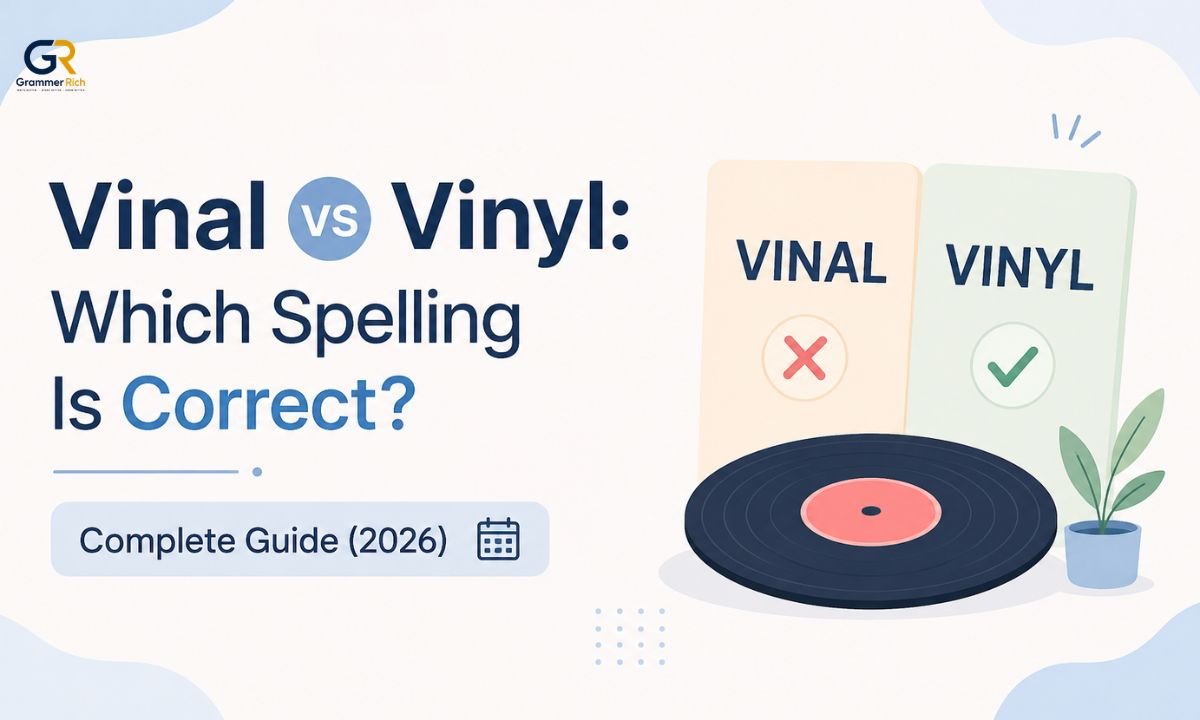
Vinyl is the word you almost always want — it’s the plastic material used in records, flooring, and signage. Vinal, spelled with an “a,” is a different and far rarer word: a synthetic fiber used in some ropes and fabrics. So when people type “vinal” meaning records or car decals, they’re usually just misspelling vinyl.
Mixing these up is an easy mistake, and honestly, most spell-checkers won’t catch it since vinal is a real word too. In this guide, we’ll break down exactly where Vinal vs Vinyl trips people up, show real examples of each in use, and help you pick the right one every time — no guesswork required.
Vinal vs Vinyl
At the center of this whole mix-up is one simple fact: vinyl is a real word with real meaning, and vinal isn’t. Vinyl refers to a type of synthetic plastic material, most often polyvinyl chloride (PVC), used in everything from flooring to records to car wraps. Vinal is simply a phonetic slip — it sounds close enough to vinyl that people write it down the way it sounds rather than the way it’s spelled.
Here’s the part that trips people up: the word feels like it should have an “a” in it, especially if you say it out loud quickly. But dictionaries, manufacturers, and grammar authorities all agree — vinyl is the only accepted spelling.
Vinal vs Vinyl: Key Differences
| Feature | Vinyl | Vinal |
| Dictionary status | Recognized word | Not recognized |
| Meaning | Synthetic plastic (PVC) material | None — misspelling |
| Common in | Flooring, records, signage, wraps | Typos, casual searches |
| Pronunciation | “VY-nuhl” | Same sound, wrong spelling |
| Correct usage | Always | Never |
The table above sums up the core vinal vs vinyl comparison. One word carries real technical and cultural meaning. The other is a spelling habit that spread because of how the word sounds when spoken casually.
What Does Vinyl Mean?
Vinyl is both a chemistry term and an everyday word. In chemistry, it refers to a group derived from ethylene, and it’s the basis for polyvinyl chloride — the plastic polymer used in countless products. In everyday language, “vinyl” usually just means “that plastic material” or, in music circles, a record.
Definition of Vinyl
Technically, vinyl describes a class of compounds built from a specific chemical structure. Practically speaking, when someone says “vinyl,” they almost always mean PVC-based plastic or an object made from it — flooring, siding, records, or wrap material.
Types of Vinyl
Vinyl isn’t one single product — it comes in several forms depending on how it’s manufactured:
- Rigid vinyl — stiff and durable, used in pipes and siding
- Flexible vinyl — bendable, used in upholstery and wraps
- Sheet vinyl — rolled flooring material
- Luxury vinyl plank (LVP) and luxury vinyl tile (LVT) — premium flooring styles
- Self-adhesive and printable vinyl — used for decals, signage, and crafts
Common Uses of Vinyl
Vinyl shows up in more places than most people realize:
- Flooring (waterproof and resilient flooring options)
- Phonograph records (analog music format)
- Vinyl siding for homes
- Car wraps and commercial signage
- Vinyl decals, wall decals, and Cricut-style craft projects
- Heat transfer vinyl (HTV) for clothing and fabric printing
Is “Vinal” a Real Word?
No. “Vinal” doesn’t appear in Merriam-Webster, Cambridge Dictionary, or any major English dictionary as a standalone word with its own meaning. It exists purely as a spelling variant born from mispronunciation and typing habits, not as recognized vocabulary.
Dictionary Insight
Search “vinal” in a dictionary and you’ll typically get redirected to “vinyl” — that’s your answer right there. Dictionaries track how language evolves, and if vinal had earned legitimate status, it would show up as an accepted alternate spelling. It hasn’t, and it likely won’t.
Why It’s Usually Incorrect
The short version: vinal is a phonetic guess, not an etymological spelling. English doesn’t always spell words the way they sound, and vinyl is one of those cases. The “y” in vinyl comes from its chemical naming convention, not from casual pronunciation.
Why Do People Confuse Vinal and Vinyl?

This mix-up isn’t random — there are a few clear reasons it keeps happening.
1. Similar Pronunciation
Said quickly, “vinyl” can sound like it has an “a” sound in the middle syllable. That auditory blur is the root of most vinal vs vinyl confusion.
2. Typing Mistakes
Fast typing plus a word that already feels a little unfamiliar equals swapped vowels. It’s a simple slip that happens with plenty of technical-sounding words.
3. Lack of Awareness
Not everyone works with vinyl products regularly, so the correct spelling never gets reinforced through repetition the way common words do.
4. Autocorrect Issues
Ironically, some autocorrect tools and casual writing platforms don’t always flag “vinal” as wrong, especially in usernames or product tags, letting the error slip through unnoticed.
Pronunciation Guide
Vinyl is pronounced “VY-nuhl” — two syllables, with the stress on the first. Think of it like “final” but starting with a V sound instead of an F. That comparison alone can help you remember both the sound and the spelling at once.
How to Use Vinyl Correctly
Using vinyl correctly just means applying it whenever you’re referring to the plastic material or its many products — never with an “a” in place of the “y.”
Examples in Sentences
- The record store had a wall full of vinyl for sale.
- We chose vinyl flooring because it’s waterproof and low-maintenance.
- The sign shop printed our logo on adhesive vinyl.
- Her jacket had a vinyl finish that looked like leather.
Usage in Different Contexts
Vinyl changes meaning slightly depending on context. In music, it usually refers to records themselves (“I collect vinyl”). In construction and home improvement, it refers to flooring, siding, or wall coverings. In branding, it refers to signage, wraps, and decals. The spelling never changes — only the application does.
Vinyl in Real Life: Practical Examples
Music Industry
Vinyl records remain a beloved analog format among collectors and audiophiles. Despite the rise of streaming, phonograph records have seen a steady resurgence, prized for their warm sound and physical presence.
Home Improvement
Vinyl flooring and siding are popular because they’re durable, moisture-resistant, and budget-friendly compared to hardwood or tile. Luxury vinyl plank and tile options now mimic wood and stone convincingly while staying waterproof.
Commercial Use
Businesses rely on vinyl for banners, car wraps, window decals, and signage because it’s weatherproof and holds color well over time. Vinyl cutters and printable vinyl have also made it a staple in small-business branding and craft businesses alike.
Vinyl vs Plastic: Are They the Same?
Vinyl is a type of plastic, but not all plastic is vinyl. Vinyl specifically refers to PVC-based synthetic material, while “plastic” is a broad umbrella term covering many different polymer types.
Key Difference:
Plastic is the category; vinyl is one specific member of that category, built from a particular chemical structure involving ethylene and chlorine. So while every piece of vinyl is plastic, not every plastic product is vinyl.
Origin of the Word “Vinyl”
The word “vinyl” traces back to chemistry nomenclature tied to ethylene compounds. As PVC became a widely manufactured synthetic material throughout the 20th century, “vinyl” moved from a purely technical chemistry term into everyday vocabulary, eventually becoming shorthand for records, flooring, and countless plastic goods.
How to Remember the Correct Spelling

A few tricks can lock in the correct spelling for good:
- Picture the word “final” and swap the F for a V.
- Remember that vinyl relates to the chemical term “vinyl group,” which always uses a Y.
- Say it slowly and deliberately: “vi-NIL,” not “vi-NAL.”
- Associate it with records — vinyl records — a phrase that’s everywhere in music culture and almost never misspelled in that context.
When Should You Use “Vinal”?
Never, in standard English writing. There’s no accepted context — technical, casual, or creative — where “vinal” is the correct choice. If you see it used anywhere, it’s a typo or an informal error, not a valid alternative spelling.
Common Mistakes to Avoid
- Writing “vinal flooring” instead of vinyl flooring
- Searching “vinal records” instead of vinyl records
- Assuming vinal is a regional or informal spelling variant
- Trusting autocorrect to catch the error automatically
- Using vinal in professional or published writing
Vinal vs Vinyl in Search Trends
Despite being incorrect, “vinal” still generates a surprising amount of search traffic every month.
Why “Vinal” Still Gets Traffic:
People type words the way they sound, especially on mobile devices where speed matters more than accuracy. Search engines are smart enough to recognize the intent behind “vinal” and typically show vinyl-related results anyway.
Insight:
This is exactly why understanding vinal vs vinyl matters — not just for spelling accuracy, but for writing content, product listings, or messages that come across as polished and credible.
Conclusion
The rule is simple: vinyl is correct, vinal is not. Whether you’re talking about records, flooring, signage, or craft projects, the spelling never changes — only the context does. Keep the “final” trick in your back pocket, and you’ll never mix up vinal vs vinyl again.

Welcome to Grammarrich.com, your trusted source for grammar tips, writing guides, and language learning. With 5 years of experience in the grammar niche, our goal is to provide clear, accurate, and easy-to-understand content that helps everyone write with confidence.